Author: Crishna

  • @Medium: i’m hype about Juneteenth 2020 and you should be, too.

    @Medium: i’m hype about Juneteenth 2020 and you should be, too.

    At a numerous and respectable meeting of the Africans and their descendants, of the city of New-York, held the 2nd day of Dec 1807, at the African School Room, Cliff Street, for the purpose of taking into consideration the propriety of celebrating the day on which the act, passed by the Congress of the United States for the abolition of the Slave Trade, takes effect.

    ~The Providence Gazette, New York, December 26 1807 [1]

    Juneteenth: A Rundown from then to now. This article was originally published on Medium.com on June 17, 2020.

    Let me start with the fact that February First is Freedom Day. An article on AlJezeera.com from 2017, the site explained the holiday to its readers in a piece on Edmonia Lewis’, a Black Ojibwe woman being recognized in a Google doodle for Black History Month. The article reads: “February 1 is also observed in the U.S. as National Freedom Day. On this day in 1865, President Abraham Lincoln submitted the 13th amendment — which called for the abolition of slavery — to the state legislatures.”[2]

    Okay, now stick with me. I’m going somewhere with this.

    Contemporarily February First is referred to as “National Freedom Day” on the federal calendar, if referred to at all. Amongst all black folk, though it has been celebrated on June 19th and called “Juneteenth” for decades and a thousand street parades will argue the same. But in its time — the mid-19th century — Juneteenth was referred to as “Emancipation Day.” Once proposed, Emancipation Day quickly spread amongst the freedmen communities as they constructed a collective free black identity in the antebellum United States. The festivals took on a central role bringing the communities together, educating each other and the public of their collective identity, and intentionally disrupting the space politics of the areas where they publically congregated.

    The challenges emancipated Black folk faced in establishing the public celebrations reflected the complexities of their particular social structures and political value as “freed.” Because of this negotiation, the festivals grew to occupy a position of cultural influence, defining black political, social, intellectual, and economic traditions from then until right now.

    But, somehow, come the late twentieth century, Blacks found that Freedom Day had been adopted as a national holiday and black observances had severely dwindled. Though it now occupied its own space on the national calendar, its significance as a celebration of black emancipation had been appropriated as a “patriotic” celebration of American legal freedom through law and order, not as the original Black holiday celebrating the richness of our resilience, acceptance and undeterred hope of a progressive nation.

    For us — for, I, too, am Black — national recognition of the abolition of the African slave trade had not become the ticket to “full” American-ness, the way other culturally significant holidays had been. To be more explicit, Hanukkah, St. Patrick’s Day, and arguably Columbus Day were adopted by the national holiday calendar with the intention of “inclusion” and “diversity” in the commemorative interests of White ethnic groups: the Jewish, the Irish, and the early European settlers. American celebrations are a story of whiteness. In response, Black American festive traditions have taken on the rich and varied responses of our people to decide to celebrate anyhow and without apology.

    Holidaymaker, Carter Godwin Woodson, of African-American History Week, at one time, compared the Jewish diaspora’s publicly recognized history to the non-written history of American Indians: “If a race has no history, if it has no worth-while tradition, it becomes a negligible factor in the thought of the world, and it stands in danger of being exterminated… The Hebrew keenly appreciated the value of tradition, as is attested by the Bible itself. In spite of world-wide persecution, therefore, he is still a great factor in our civilization.”[3]

    As we chew on this, his statement reveals the impetus for all Black American holiday creation: the deeper problem of establishing a recognized cultural tradition. Though I contest his assertion with the lens of today and an appreciation of non-traditional forms of communicating knowledge, his point is clear. Black holidaymakers like him have tasked themselves with the call to establish a publically recognized history.

    Unlike white ethnic immigration in America, coming to the “New World” for better quality of life, the culture of a formerly enslaved people within this narrative is difficult to reconcile. He goes on to claim that this systematic exclusion from the American story is “the logical result of tradition, the inevitable outcome of thorough instruction to the effect that the Negro has never contributed anything to the progress of mankind…”

    But, I, to it the crisis of ethno-genesis[4] constantly plagues our ability to establish a clear Black American identity — I am imagining awkward black children on “cultural heritage day” in dashikis and muumuus. While the anthropological term does usually require a linguistic component, it is not a far stretch to apply it to the founding of Black America. It refers to that glorious creation moment when history births a new people from nothing.

    Is that not our story? Truly, we are not imports to America; we are created in America. We are America. Briefly examined: the enslaved people groups that were brought to the Americas were made up of many kinds of peoples. Through forced reproduction and rape, the ethnic waters become so muddied they are unrecognizable in their original form. An indigenous, European, African, Asiatic mix unique to our continent, creating a new ethnic group inherently and specifically American. Much like jazz, much like southern food, and like most of the other creative parts of our culture, to be black in America is to be most originally American.

    As you can imagine, this is a reality that is a wonderfully rich source of identity crisis. But, it is also the hinge point upon which we weave our greatest imaginations. For the history of our race, in dreaming of an Africa we never knew and an ethnic purity we cannot trace, we have been both proud and ashamed of our Motherland. I picture now kids slurring “African dirty foot” taunts on the playground growing up to proudly wear Kente cloth stoles at graduation ceremonies across the country.

    We see this in the two holidays this essay series focuses on: Freedom Day and Kwanzaa, though I deal with Kwanzaa in another essay. We see this tension, also as we look into our future. We see it as young second-generation Africans connect with their mother’s land through afro-futurist conversations and fantastic novels of speculative fantasy. They translate the groans of our enslaved great-great-grandparents shipped across the Atlantic and begin to root and bud in the art, spirituality, literature, and technological innovations of tomorrow as dreams realized centuries later.

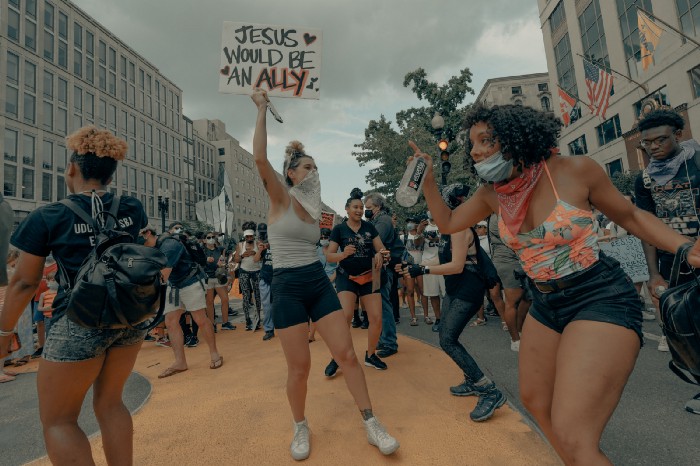
    Amongst this backdrop of histories, stories and ruminations, “Zoom meetings” and “re-opening plans” fight to keep the comfortable positions they have held in my mind for the past few months. I can’t help but be shaken out of this quarantine lull into meditation as this week’s excitement about a Juneteenth grows. Imagine a Juneteenth on fire, a Juneteenth in public, a Juneteeth negotiating the same space politics of a group of newly freed blacks gathering at Liberty Hall in Philadelphia in 1809.

    Nestled between, Memorial Day and the Fourth of July, we choose, in something like than five decades, to widely celebrate Juneteenth again. Still, I must humbly remind our Twitter-age Black consciousness, that this is not the first time we have made this decision. In America, nationally adopted holidays highlight painful cultural traumas and exclude us systematically from the nation’s historical narrative.

    Famously, the ever eloquent, perfectly-coiffed Frederick Douglass lamented his invitation to speak at the National Celebration of the Fourth of July in 1852: “The sunlight that brought light and healing to you, has brought stripes and death to me. This Fourth of July is yours, not mine. You may rejoice, I must mourn. To drag a man in fetters into the grand illuminated temple of liberty and call upon him to join you in joyous anthems are inhuman mockery and sacrilegious irony. Do you mean, citizens, to mock me, by asking me to speak today?”[5] — A speech he gave on July Fifth, in protest.

    This is the history of Emancipation celebrations from the very start. From Freedom Day to Emancipation Day to Juneteenth, Blacks have celebrated the legal freeing of the slaves in America on their own terms deliberately not allowing it to be appropriated or misconstrued, which is why the date had moved so much over the past two centuries. Emancipation scholar, Mitch Kachun reminds us that for American Blacks, celebrating out loud is more than having a good time. As I say, time and time again, for Black folks, joy is a radical act. He explains that holidaymaking is a particular ritual necessary for “self-definition and legitimization for a people in the process of becoming.”[6]

    But, this, too, is originally American. For the American Project, nostalgia and mythmaking are tools consistently exercised to unify a young nation with a diverse mixing pot culture. In moments of social and cultural insecurity, we have chosen to celebrate.

    This is true throughout our nation’s short history, and, throughout our Black American experience. In a previous set of writings on this same topic, I have looked at Kwanzaa as this example. A century after the wide adoption of Juneteenth, the founders of Kwanzaa revived the tradition of holiday-making but shifted the Black Holiday Tradition in a new direction.

    Having rejected the goal of making America more inclusive, Black holidaymaking in the mid-1960s takes its cues from Frederick Douglass: holidays explicitly focused on critiquing the national festivals. But, it’s deep than that. We have to have a better appreciation of Black Radical consciousness because, more accurately, Kwanzaa was a part of a larger attempt to reorient the American definition as Afrocentric. Reviewing our national heritage through a black cultural lens challenges the established narrative in very uncomfortable ways, for Blacks and non-Blacks alike. But is it also, more accurate and immensely more fulfilling for us all.

    But, the heart of the Black American festive tradition from Emancipation Day to Kwanzaa and beyond is in engaging those very questions of memory, witness, mercy, and joy. As we celebrate Juneteenth, both internally in our communities and externally with our allies in the face of an American audience on brimming with the potential of a transformative moment, let us remember this history. Our ancestors founded this tradition on three ideals: education, empowerment, and American accountability (not equity)[7].

    Celebrating Black American holidays, specifically Juneteenth and Kwanzaa, is a tradition that reflects our collective power to create a shared black cultural identity on our terms.

    We must always celebrate. Joy is a radical act.

    So, if you protest with us, won’t you celebrate with us, too?

    ~C.

    “National Jubilee of the Abolition of the Slave-Trade:

    The undersigned committee of arrangement, appointed by the general meeting of the people of colour, for the celebration of the national jubilee, most respectfully inform the public, that they will assemble at Liberty Hall, on Monday morning, January 2, 1809, at 9 o’clock… Every exertion has been made… to show their gratitude in the most public manner, for so great a blessing…”[8]

    ~ The Wilberforce Philanthropic Association, January 1, 1809*

    — —

    further reads:

    [1] At a numerous and respectable meeting of the Africans. 1807. The Providence Gazette 1807, sec XLIII.

    [2] “Edmonia Lewis: Why Google celebrates her today.” (2017) AlJezeera.com. https://www.aljazeera.com/indepth/features/2017/02/edmonia-lewis-african-american-trailblazer-170201071933432.html

    [3] Woodson, C. G., & Wesley, C. H. (1959). The story of the Negro retold. Washington: The Associate Publishers.

    [4] Hill, J. (1996). Introduction: Ethnogenesis in the Americas, 1492–1992. In Hill J. (Ed.), History, Power, and Identity: Ethnogenesis in the Americas, 1492–1992 (pp. 1–19). Iowa City: University of Iowa Press.

    [5] Douglass, F., & Foner, P. S. (1950). The life and writings of Frederick Douglass. New York: International Publishers.

    [6] Kachun, Mitch. (2006). FESTIVALS OF FREEDOM: Memory And Meaning in African American Emancipation Celebrations, 1808–1915. Univ of Massachusetts Pr.

    [7] Kultner, Paul, (2016) “The Problem with That Equity vs. Equality Graphic,” CULTURALORGANIZING.ORG http://culturalorganizing.org/the-problem-with-that-equity-vs-equality-graphic/

    [8] Wesley, D. P. (1971). Early Negro writing, 1760–1837. Boston: Beacon Press.

    * “N.B. The committee, after service, shortened their rout on account of the numerous spectators, and dismissed at the place of rendezvous, with the greatest acclamations of joy.” — from page 364
  • the marathon continues…

    the marathon continues…

    Here’s the thing about losing Nispey Hussle: when our niggas make it out the hood, we expect that they have made it. When we lost Nipsey, it was a harsh reminder that that’s just fantasy. We never make it out. We’ve just escaped it for now. I can only say a few things about Nipsey because I confessed that I missed the rise of Nipsey. I went through a rejuvenation the past four years and stopped listening to hip-hop for a while. The last time I heard about Nispey, he was making DatPiff mixtapes with Curren$y and Wiz. I missed when he started dating New New from ATL. And definitely missed the Vogue covers. Most significantly, I missed the uplift work he was doing — the businesses, the foundation, the peacekeeping work– the good stuff. Not that it was all that public anyway. The realest ones do their best work on the low. But, I would have missed it anyway. 

    Then a couple months later, I lost my dog Joe Brown. It was crazy how it felt like my classmates and I lost our own Nipsey Hustle. Maybe that’s a stretch, but I can make a case for it. The irony of Esquire trying to get into and Ivy League school from the hood. New-New’s dad being a millionaire that made it out of the projects. I missed the rise of Nipsey, but I certainly didn’t miss the irony of how familiar losing Joe felt. This is the fantasy. We just one false step from ending back up in the hood. the truth is, we are all Ant. 

    My friends at Dartmouth and I used to make jokes about collective burden to “get our niggas out the hood.” We joked, but we were also very serious. Of course, not all of us or honestly, most of us came out of the hood because not that many kids like that go to Dartmouth or have even heard of Dartmouth. I mean, it’s the best kept secret in the League.

    But, also we were never that far from it either. We’re all less than six degrees of separation from a sibling, an aunty n’em, a cousin n’em still trappin out they mama’s house, serving time for something wack/unnecessary or struggling to get bills paid with a fresh mani/pedi. We never forget where we come from for real. That small college in the middle of the Granite State off the Connecticut River was never truly a bubble for us.

    A few times I explored this.

    One time, after I graduated, the Black Alumni Association celebrated their 40th anniversary and asked me to do an oral history with the muralist, Rev. Florian Jenkins. When I met with him, he talked candidly about his inspiration for the Malcolm X murals which don the Black affinity house. They had been like a backdrop to our most black moments at Dartmouth, from community (GB) meetings to chilling from too hot parties down in the basement. It was a place of refuge. He reminisces how inspired he was about the students having such a strong commitment to uplifting their communities back home when they approached him for the commissioning of the mural.

    In fact, there’s a whole long narrative I encourage everyone to read to explain how Dartmouth’s black students made Dartmouth College more black. Read about their campaign to bring more students like them into their privileged world in the late 60s. I encourage you to read about a program called A Better Chance. Without being too formal, the point I’m making is this: they went to get their niggas out the hood.

    I wonder if I’m coming off as facetious here. I’ll go a little deeper. The Civil Rights Movement pushed white people to confront their privilege on massive levels. It got far enough North to make them realize how out of touch the Ivy League was. Their last bastion, the final fort: Fort Dartmouth, the northernmost point on the Ancient Eight map, was penetrated. They had no choice but to open the gates.

    For black studies historians, it’s no surprise that after the large influx of black students at dartmouth, the co-education policies were passed. Yes, while Dartmouth is collecting  million dollar commitments from its newly-established alumnae group “Women of Dartmouth,” they may have waited a much longer time and lost an entire decade of women graduates had the black men of the 60s classes not committed to get their niggas out the hood. The early 70s brought in the floodgates of change–bringing their niggas out the hood was a watershed moment.

    But that was the second time I unpacked this feeling. I used my professional archival work, and historical research raing to contextualize and intellectualize our late night jokes. But, the first time I unpacked this was photographing Josef Brown. That was my dawg. Josef was already intimidating. He was 6’9 with glorious chocolate skin covered in tattoos. And he was quiet and full of swagger. I can only think of a few things more upsetting to the idyllic Hanover scene. But, that was the mission Joe came on: the mess up your idea of what you thought was possible.

    Let me be totally transparent, there’s two things working here that make this story kind like Nipsey. One: Once you make it out the hood, you should be good, right? 

    The murder of my dawg shows us that structural inequalities are just that: structural. In the Trump era, we almost forgot that racism has nothing to do with specific individuals, or groups of people with stupid swastika flags, red baseball caps and hate speech websites. It’s structural.

    I almost forgot that my Ivy league degree wasn’t a “get out of jail free” card. I almost forgot that I was black and from a poor neighborhood. I almost forgot that tokenism can’t save you. And I especially wanted to believe it, now that I had moved back home.

    That’s point two. The murder of Joe reminds me that the streets is relentless. That’s why this thing messed me up. Joe had all the parts, right? He did all the “right” stuff. He made it out. Then, gave himself and his gifts and talents back to the hood. The streets had to honor that, right? 

    Something about Joe’s presence bristled me when I first met him. It was like he wasn’t supposed to be here with us. We were the talented tenth. We were the exceptional few and he had slipped through the bougie cracks. We knew “the formula:” attending the best schools, having the best grades, using the best vocabulary, coming from enough wealth… And here he was with us–pants sagging, a little “too thuggish” sometimes and completely not caring what anyone thought about him.

    That sort of thing messes with your exceptionalism.

    So, how did he get here? I’d always wondered, but never really knew the answer to that question until I did his portraits for my photography class. I was studying light on melanated skin using black and white film. I’d always thought his skin was gorgeous from afar.

    I’d read 50th Law (WorldCat) that Curtis Jackson wrote with Robert Greene for the first time the summer before Joe started as a freshman. When I heard Joe’s story, it was like the 50th Law in practice. Joe was the word made flesh.

    As I did Joe’s portraits, I learned that he was deep. Very deep. I mean, a lot of us had good stories and some of us even had tragic stories. But the story of Josef Brown is story of both survival and triumph and one that I could not do justice to here. It’s the story of a true born hustler how figured out the “right” hustle, a story I wished he’d had the platform to tell himself.

    Joe generally kept to his few friends and a few events, but not a lot of other stuff. He was, of course, very kind-hearted and fun when engaged, but he didn’t make a scene of himself. He didn’t really need to, though. He was noticed as soon as he entered a space. Thinking back, I can’t imagine what that must have felt like. I can’t imagine if he felt out of place or foreign or nothing at all of any of this. 

    Still, I’d like to comfort myself by thinking we protected him as a community. He always felt like immediate family.  He was like a reminder of where we came from. His presence demanded of us not to let the streets down. He grounded our hind-minded aspirations in realities only faced when we went home for breaks. He poked at our bourgeois dreams.

    At least, that was my experience.

    Then two years ago, I came back home to Florida. And I stayed. I told Joe about coming home and how he had inspired me to go back and do the work. He laughed and told me he thought for sure I was on an island somewhere with no cell reception being a monk. He always had the jokes. 

    But he kept up with me and I kept up with him. I was grateful for that because ultimately, I was overwhelmingly proud of him. He didn’t talk about it, unlike most. He just was about it. He was starting the business, going to his little nieces’ birthday parties and hosting folks when they came through his city, New Orleans.

    That’s what I wanted to do. That was the real goal. After all, isn’t that what we went away to do? To gain a leg up on the system then spread the knowledge to the people. Surely we knew that when we go up when should all go up. We knew we’d be better off not just as a family, or as a block, but as a nation. There’s security in numbers. That was DuBosian thought in praxis.

    We couldn’t just be comfortable being the token, we had a responsibility.

    Having lunch with a friend a few weeks ago who’d just moved to my hometown for work after Wharton, he reminded me of this. I expressed to him the burden of having gone away only to return to the same old struggle.

    He said to me with wisdom that seemed to superseded the moment: “to whom much is given, much is required.” He wore it like a coat at the time when he said it. And I could tell its gravitas was definitely palpable resting in the middle of the table we were sharing.

    I, too, had just learned that lesson, but on the 101 level this past summer. My brother, my best friend, my other half got sentenced to prison. I had done all I could think to do to keep him from the streets, but he could see nothing else. The streets were pernicious.

    He was one of the brightest students of his high school and had turned down many college offers to enter the workforce. But he never really got off the ground. He ended up getting into trouble. Then getting into trouble again. When he didn’t get a light sentence, it broke all of our hearts. 

    But, it really messed me up.

    Still, as I write this, I think about how I felt when I read my brother’s first letter to me from a jail two hours west of me. I think of this in light of Trayvon Martin’s murder five years ago. The facility where my brother was living is one hour from the gated community where Martin was shot.

    I wish deeply that he was here with me. But most recently, when he was here with me, he was sleeping on a pallet of my yoga mat and a not-quite-long-enough knitted Buccaneers blanket. I myself had only my comforter and a blanket underneath since I’d just recently moved into my studio. We were hustling.

    I urged him to stay at our parents house where they had a guest bedroom. But, I knew he had already tried that. I had gotten in the middle of his quarrel with my dad enough times. I had to face it: he was homeless. I had just moved into my studio and had no furniture. He was staying with different friends every night. That had been the case for a couple months.

    Thinking back those tumultuous four months, he had no choice but to get arrested or be killed. My dad says that sometimes. I did my best to be compassionate, but responsible. I mean, who can fight a system alone? Collectivism seemed like a good answer. The “Right” answer.

    But, these days I don’t believe in it. I don’t believe it is enough. I mean, who can loose you when you are born trapped? Our mental slavery started as soon as we realized we were “the other.”

    In these moments, I looked to my faith and my hope in Resurrection–both physical and spiritual. These days, I read the Gospels of Jesus Christ, then I read James Cone then the gospels again.

    I read the following once and I loved it:

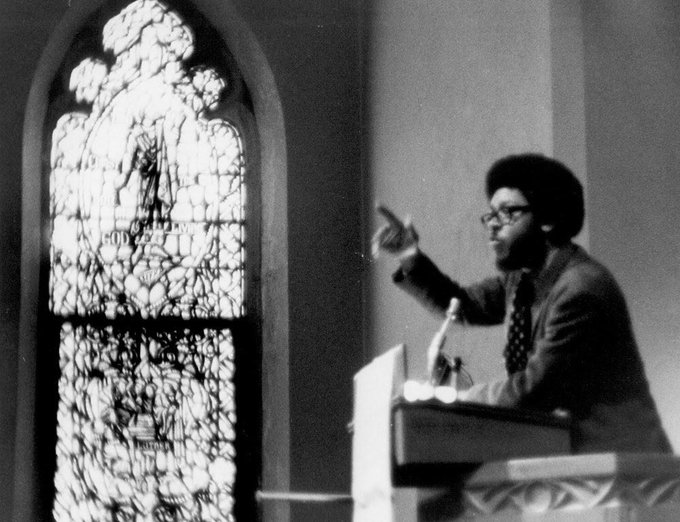
    “…if the gospel is a gospel of liberation for the oppressed, then Jesus is where the oppressed are and continues his work of liberation there. Jesus is not safely confined in the first century. He is our contemporary, proclaiming release to the captives and rebelling against all who silently accept the structures of injustice. If he is not in the ghetto, if he is not where men are living at the brink of existence, but is, rather, in the easy life of the suburbs, then the gospel is a lie.”

    That’s Cone in his work Black Theology, Black Power (WorldCat).

    In his letter, my brother tells me prison isn’t as bad as expected. His handwriting and prose are better and tighter than I can remember in a long time. The letter reminds me that I sleep better at night nowadays. I know where he is and that he’s alive.

    Before, he would call me everyday–from any friend’s phone he could borrow. Every once in a while, he missed a day. And admittedly, it sent me into a frenzy.

    I might call any number of random 20-year olds from my call log looking for news from him. Sometimes, I’d just missed him. Other times they hadn’t seen him since yesterday.

    Panic, until an unsaved number calls – his voice on the other end: “What’s up, Nana?”

    Relief. “You ok?” I ask. “Yea. Always.” I love him. He was born a hustler for sure.

    In his letter, he continues, telling me that “You know, Nana, it’s not as wicked as TV and films portray it. But it’s still sh*tty.” I believe him. And, honestly, I am grateful to the prison system for it. Somehow, I feel slightly more confident in my tax dollars…

    But, that doesn’t bring me comfort for Joe. I can’t text my dog anymore and ask him “whaddup, Judge?”- a reference to the black TV Judge Joe Brown who also escaped a troubled past only to be able to be the judge helping young black men like himself make better choices. He usually replied with “What up Three Stacks” or “What up Shan” or “What up Gudda Gudda.” I laugh cuz I still have no idea what the last name even meant. But I won’t get those answers. No letters or check-in calls from unknown phone numbers. His portraits from my series still adorn his mother’s wall, something like a memorial now, I guess.

    I’m sayin’. Who can bring back Joe Brown?

    No one.

    It’s a wrap. They ran up on my dog. At his house.

    And they decided his time with us was done. The audacity.

    They’re not the only ones to make those decisions while screaming quoting Tupac: “only God can judge me.” Everyday cops in uniforms continue to do what they’ve always done: disregard black lives. So many slain young black men. All killed too soon, shot down in these streets like beautiful soaring birds. 

    These are the thoughts I can sometimes not sleep with. 

    I worked really hard to find a conclusion for this post. I don’t really have one. Is there a conclusion to the cycles of violence that plague our communities?

    Or even a conclusion to the cycles of violence we inflict upon ourselves? I’m not sure. 

    But, I am sure in my faith. I have no choice but to believe I’m going to see my dog again. I must believe in the resurrection. I know that my brother will come out free one day. Isaiah 55:12 tells me so. I must believe in God’s timing.

    And, I must believe in the God of Cone’s work: “But for the Christian, there is only one interpretation: [our] rebellion is a manifestation of God himself actively involved in the present day affairs of men for the purpose of liberating a people. Through his work, [we] now know that there is something more important than life itself.”

  • over. it. / interconnection as purpose

    over. it. / interconnection as purpose

    I know that it’s easy to think God isn’t real.
    Or if He is, that He is just the Big Bang.
    Or if He is more than the Big Bang, He’s the un-namable element of energy that interconnects all things together.
    But, what a shame
    to miss out on having a relationship with God.


    If it hasn’t happened to you, you may not believe it, but God answers prayers.
    Moreover, if you consistently seek Him,
    He continues to answer those prayers.

    We can debate about why the Divine Spirit has to be called God in the first place
    or why that God isn’t referred to as Her,
    But I really can’t answer that for you.

    Only He can answer for you.


    What I know for sure is that God is real to me.

    —— (more…)